


Magicbricks Buy, Rent Property
MagicBricks Reality Services Ltd
Finding a home in India can quickly become a full-time task when listings are spread across different sources, locations, and property types. I found Magicbricks Buy, Rent Property most useful as a central place to begin that search, especially when I wanted to compare homes rather than contact the first advertiser I saw. It is a free House & Home app from MagicBricks Reality Services Ltd, built around buying, selling, and renting property.
The app is aimed at a wide audience: someone looking for a first rental, a family comparing neighborhoods, an owner preparing to sell, or an investor checking what is available in a particular area. Its broad reach is part of the appeal. The Android listing shows over 10 million installs and an average rating of 4.4 from around 308 thousand ratings, so it clearly has a substantial user base. That does not guarantee every listing will suit you, but it does make the app a practical starting point rather than a niche directory.
What to expect when you open the property search
My first impression was that this is not an app for casually browsing attractive homes with no plan. It becomes more useful when I already know at least one thing: the city, locality, budget, preferred property type, or whether I am looking to buy or rent. Without that starting point, the amount of choice can feel unfocused. With it, the search becomes much easier to manage.
The main strength is the way the app brings property discovery into a mobile workflow. Instead of opening separate browser tabs for apartments, houses, plots, and commercial spaces, I can use one service to narrow the search and inspect possibilities. That is especially helpful when I am still learning which neighborhoods fit my budget. I can begin broadly, then use the results to understand how much space and what kind of property are realistic in each area.
I would not treat every listing as equally ready for a decision. Property advertisements can differ in how clearly they describe the home, how current the information is, and how much detail is available before contacting the advertiser. My approach is to use the app for shortlisting and comparison, then verify important facts directly before spending time on a visit or making any payment.
Related News

Why WhatsApp Messenger Still Makes Everyday Communication Feel Easy

Jurassic World: The Game Is the Better Dino Tycoon for Strategic Players

Threads in Real Life: Who Should Join, Lurk, or Leave

How SHEIN Turned Shopping Into an Endless Content Feed

How to Make Fortnite Feel Smarter on Mobile

Should You Switch to Microsoft Outlook on Mobile?
The app is free to download and is suitable for Everyone, which makes it approachable for a household where more than one person wants to participate in the search. It supports Android devices running version 7.0 or later. The current version shown for the app is 9.5.7.0, while optional in-app purchases range from $6.99 to $219.99 per item. I would begin with the free experience and only consider a paid option if I understood exactly what it added to my search.
Who will get the most from it
Magicbricks is a strong fit for renters who are moving to a new city and need to learn the market quickly. It is also useful for buyers who want to compare several localities before speaking with agents or owners. A person selling property can use the same ecosystem from the opposite side, while an owner or landlord may find it convenient to reach people already searching for a home.
I think it is less suitable for someone who already has a trusted local broker and only wants a small, carefully verified set of properties. It may also frustrate users who expect instant answers to questions about maintenance, neighborhood noise, title documents, or the exact condition of a home. Those questions usually require direct confirmation, and an app cannot replace a physical inspection or proper legal checks.
Gallery
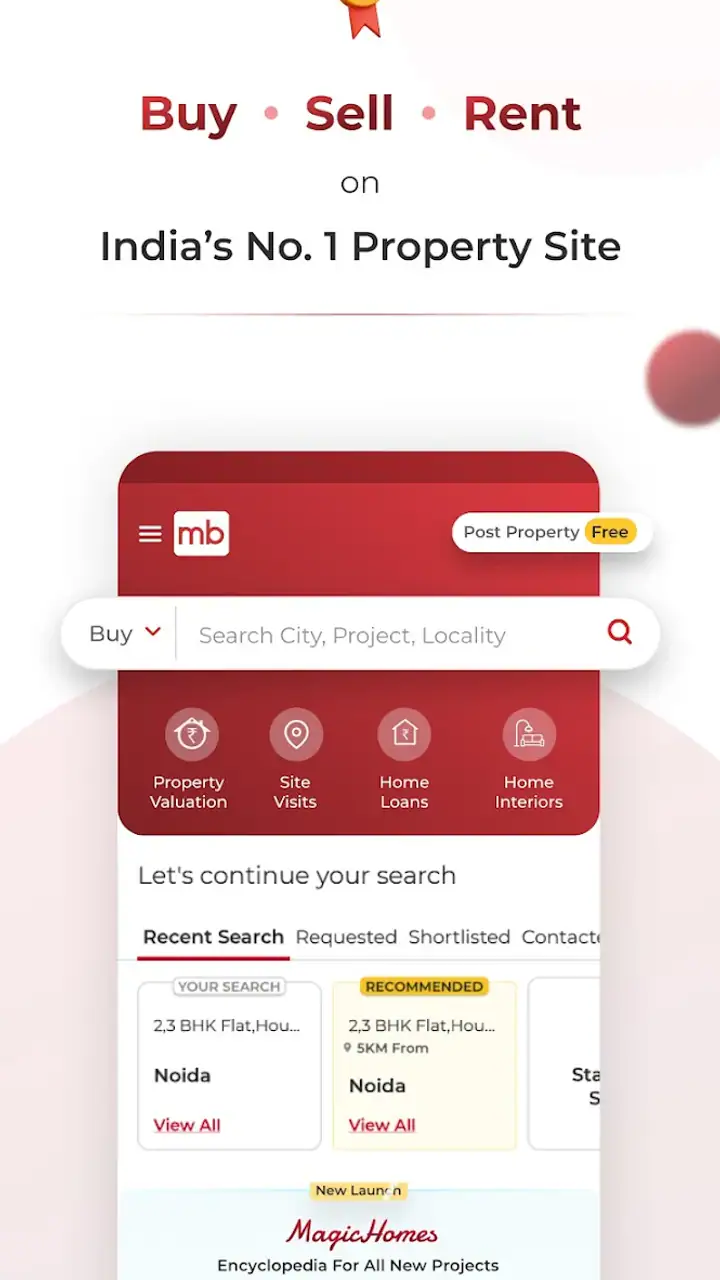
Setting up a search that does not waste your time
For a first-time user, I recommend resisting the urge to open every result immediately. Start by deciding whether the goal is to buy, rent, sell, or simply research. Then choose the city and a manageable set of localities. If I search an entire metropolitan area with no limits, I get a long list that is difficult to compare and easy to abandon.
Budget needs a little discipline. I would set a comfortable upper limit rather than the absolute maximum I could somehow afford, because the listed property cost is only one part of the decision. Renters may need to account for deposits, moving expenses, and recurring charges. Buyers should leave room for registration, renovation, loan-related costs, and other expenses that do not disappear just because a listing looks affordable.
Property type matters more than a new user might expect. A flat, independent house, plot, and commercial property can serve entirely different purposes, even when they appear in the same broad area. I found it helpful to decide whether I cared more about location, floor space, privacy, furnishing, or investment potential before filtering. That prevents a visually appealing but unsuitable listing from taking over the search.
One practical technique is to create a small comparison routine. For every promising result, I would note the locality, approximate size, number of rooms, furnishing status, asking price or rent, and the questions still unanswered. This is more reliable than trusting memory after viewing several similar homes. It also makes conversations with advertisers more focused.
My best setup tip is to search in two passes. In the first pass, I would keep the filters moderately open to learn the market. In the second, I would tighten the location and budget filters based on what I saw. Starting too narrowly can hide useful alternatives, while starting too broadly can make the app feel crowded and unhelpful.
How to judge results before contacting anyone
I look past the first photo and read the details as if I were preparing a checklist for a visit. Is the property type clear? Does the location match the area I selected? Are the size and room details consistent? Is the description specific enough to explain what is included? When an advertisement is vague, I treat that as a reason to ask more questions, not as a reason to assume the best interpretation.
Photos are useful for eliminating unsuitable homes, but I would not use them as proof of condition. A bright living room does not tell me about water pressure, ventilation, lift reliability, parking access, mobile signal, or the condition of shared spaces. I use the app to reduce the number of homes worth visiting, not to replace the visit.
Another useful trade-off is location versus size. A broader search may reveal a larger home outside the preferred locality, while a tighter search may produce a smaller property closer to work or transport. Magicbricks works best when I compare those choices deliberately instead of treating the cheapest result as the automatic winner.
Reaching the first meaningful result
The first successful action is not installing the app or opening a listing. For me, it is producing a shortlist that I could realistically act on. A useful shortlist might contain a few properties with different strengths: one with the best location, one with the best space, and one that appears to offer the strongest balance. The point is to create a decision set, not an endless collection of possibilities.
Imagine I have moved to Bengaluru for work and need a rental near my office. I would start with the relevant city, select renting, choose the property type I can manage, and set a budget that leaves room for other moving costs. I would then compare nearby localities rather than searching only for the exact office neighborhood. A slightly longer commute might offer better space, while a smaller home might be worthwhile if it reduces daily travel.
For each serious candidate, I would prepare the same questions before making contact. I would ask whether the property is still available, what the total recurring cost is, which facilities are included, and when a visit is possible. I would also ask for clarification on anything that looks inconsistent between the images and the written description. Using the same questions makes the results easier to compare.
A first-time buyer can follow a similar process, but the shortlist should include questions about ownership documents, approvals, age of the building, maintenance responsibilities, and the conditions attached to the asking price. The app can help identify opportunities, but it should not be the final authority on legal ownership or transaction safety.
For an owner, the meaningful first result is different: it is determining whether the advertisement attracts the right kind of inquiry. A clear description and accurate property details are more useful than simply presenting a home as suitable for everyone. If the property is aimed at families, students, professionals, or investors, the wording should make that context clear so that conversations begin with realistic expectations.
Why comparison is more valuable than speed
Property searches encourage urgency, particularly when a listing looks inexpensive or well located. I prefer to slow down long enough to compare similar homes in the same area. That can reveal whether a low price reflects a smaller size, fewer facilities, a less convenient location, or simply incomplete information. The app is most helpful when it gives me enough options to challenge my first impression.
At the same time, comparison should not become endless browsing. Once a property meets the basic requirements and the unanswered questions are manageable, I move to the contact and visit stage. Saving every possibility creates the illusion of progress while delaying the decisions that actually matter.
Common confusion and the friction I noticed
The biggest source of confusion is the difference between discovering a property and confirming it. A listing can be a promising lead without being a guaranteed option. Availability can change, details may need clarification, and the person responding may not be the final decision-maker. I would never transfer money or share sensitive documents simply because a listing appears inside a familiar property app.
Another point of friction is the variety of advertiser experiences. Some listings are detailed and easy to evaluate, while others leave important questions for the phone call. That inconsistency means the app rewards users who are willing to inspect details carefully. If I want every listing to follow the same format, I may find the experience less predictable than a small local agency’s curated list.
Users may also wonder whether the free app is enough. For ordinary searching, I would begin without paying. The free route lets me understand the available inventory and decide whether the service fits my needs. Paid items are present, with individual prices reaching from $6.99 to $219.99, so I would read the exact description of any purchase and consider whether it improves my particular situation rather than assuming payment is necessary for a good search.
Privacy and contact comfort are worth considering too. Property searches often involve phone calls and personal preferences about where someone lives. I would share only the information needed to arrange a conversation or visit, and I would keep financial and identity documents for the appropriate verification stage. A serious transaction should involve proper checks outside the initial browsing step.
There is also a human limitation that no interface can solve: a locality may look suitable on a map or in a listing but feel very different at the time of day when I actually travel, work, or return home. I would visit at a relevant hour and check the route myself. For a rental, that might mean testing the morning commute. For a purchase, it might mean visiting more than once before making a commitment.
When another approach may be better
If I am searching for a highly specialized commercial property, a local broker with deep knowledge of one district may provide more useful context than a broad marketplace. If I need legal certainty, a property lawyer and official document checks are more important than any app result. If I am only interested in new developments from a specific builder, that builder’s own sales channel may offer more direct information.
Even so, I would still consider Magicbricks useful for the research stage. It can help me learn the range of property types and prices before I approach a specialist. The key is to use it for what it does well: expanding and organizing the search, not making the final legal, financial, or physical judgment for me.
The next step after building a shortlist
Once I have a shortlist, I stop adding new listings and start validating the existing ones. I compare the full cost, location, condition, and practical fit. I confirm availability, arrange visits, and write down answers rather than relying on memory. If a property remains attractive after those checks, I move toward the appropriate professional and legal verification.
For renters, I would pay particular attention to the written agreement, deposit terms, notice period, maintenance duties, and what is actually included in the monthly amount. For buyers, I would verify ownership, approvals, outstanding dues, and the transaction documents through qualified professionals. These steps are not optional extras; they are where a promising search becomes a safe decision.
The app is also useful as a learning tool even when I do not find the final home immediately. By comparing several localities, I can adjust expectations intelligently. Perhaps I need a smaller property, a different neighborhood, a longer commute, or a higher budget. That is a much better outcome than repeatedly searching without understanding why the results do not fit.
MagicBricks Reality Services Ltd has made a broad property marketplace accessible from a phone, and the app’s long availability since December 5, 2011, helps explain why it is familiar to many people searching in India. Its Everyone age rating and free entry make it easy to try, while its large install base suggests it is a mainstream option rather than a specialist tool.
My final view is positive but practical. Magicbricks is best used as a disciplined first step in a property search: define the goal, filter with care, compare realistic candidates, ask consistent questions, and verify everything important in person and through the right professionals. I would recommend it to first-time renters and buyers who need breadth and a structured way to learn the market. I would not recommend relying on it alone for legal certainty, urgent last-minute decisions, or a tightly curated specialist search.
With that mindset, the app can turn a vague “I need a home” problem into a manageable sequence: explore, narrow, contact, visit, and verify. That is where I found its real value—not in promising that the perfect property will appear instantly, but in making the early and often confusing part of the search easier to organize.
FAQs for Magicbricks Buy, Rent Property
What features does the Magicbricks app offer for buying and renting properties?
Magicbricks provides a comprehensive platform for property seekers. Users can explore a vast database of residential and commercial properties for sale or rent. The app features advanced search filters, property alerts, neighborhood insights, and virtual tours. Additionally, it offers price trends and loan calculators to assist in financial planning.
Is the Magicbricks app free to use, or are there any in-app purchases?
The Magicbricks app is free to download and use, providing essential features for property searching. However, it offers premium services through in-app purchases. These include enhanced visibility for property listings, access to exclusive properties, and personalized assistance, which can be beneficial for serious buyers and sellers.
How reliable are the property listings on Magicbricks?
Magicbricks strives to ensure the accuracy and reliability of its property listings by verifying the details provided by sellers. The app encourages user feedback to maintain quality and authenticity. However, users are advised to conduct their own due diligence and consult with real estate experts before making any commitments.
Can I contact property owners or agents directly through the app?
Yes, Magicbricks facilitates direct communication with property owners and agents. The app provides contact details and messaging options, allowing users to inquire about properties, schedule visits, and negotiate terms. This feature enhances transparency and speeds up the property acquisition process.
Does Magicbricks offer customer support if I encounter issues or have questions?
Magicbricks offers robust customer support to assist users with any queries or issues. Users can access support through the app’s help center, which includes FAQs, contact forms, and live chat options. The support team is dedicated to resolving problems promptly to ensure a smooth user experience.
Pros
- Comprehensive property listings.
- User-friendly interface.
- Advanced search filters.
- Detailed property information.
- Regular updates with new listings.
Cons
- Occasional app crashes.
- Limited customer support.
- Some outdated listings.
- In-app ads can be intrusive.
- High data usage.


